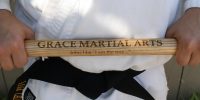

I’d like to continue a series about martial arts weapons. My purpose is to help you choose for yourself or your child one or more traditional martial arts weapons that will assist in developing an understanding of this ancient system of self defense.
If you are currently studying with a martial arts instructor, he or she will guide you to the weapon(s) that are best for your style. If you are not currently studying with an instructor, I hope this series will help you in your selection.
My first recommendation is the Yawara stick, also known as a “palm” stick because it fits neatly in the palm of your hand. Other recommendations include short and medium-length sticks, Nunchaku, Tonfa, and Hanbo. My next recommendation is the Jo.
Jo
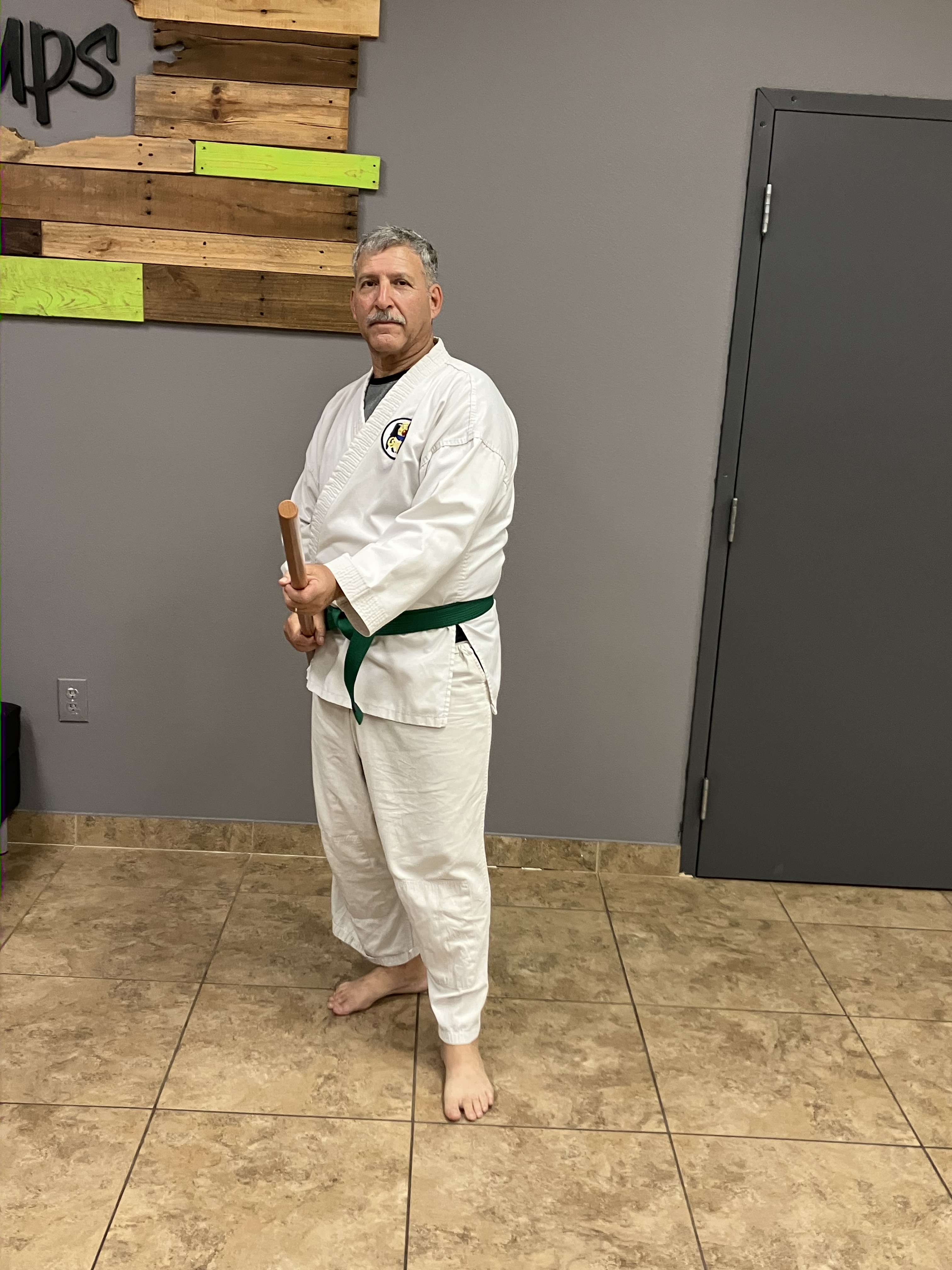
The ‘Jo’ has long been one of my favorite martial weapons. It’s long enough to defend and counter-attack from a wide variety of weapon attacks. It’s also short enough to handle easily. It worked well for me as a young teenager and I’ve seen many children use the Jo more easily than the ‘Bo.’ The Jo is about four-feet long, whereas the standard Bo is about six-feet long. Even the shorter five-foot Bo is more difficult for a child to wield than the four-foot Jo. Moving your child from the three-foot length of the Hanbo to the four-foot Jo makes a lot of sense when they are ready.
My recommendation for wooden weapons for children and young teen are as follows:
- Short Sticks (e.g. Yawara, Palm grip sticks)
- One-foot sticks (e.g. Dan Bong)
- One-foot sticks joined together by flexible rope or chain (e.g. Nunchaku, Flailing weapons)
- Two-foot sticks (e.g. Escrima, Kali, Arnis, Tambo)
- Three-foot stick (e.g. Hanbo, Biangan, Duangun, Tanjō Walking Stick, Cane)
- Four-foot stick (e.g. Jo, Hammer staff, Short staff)
- Five-foot stick (e.g. Goshaku Bo, Long Jo)
- Six-foot stick (e.g. Rokushaku Bo)
- Okinawan Oar (e.g. Eku)
Martial tradition for the Jo goes back to the late 16th to early 17th centuries when Samurai warrior Muso Gonnosuke Katsuyoshi lost a duel to legendary swordsman Miyamoto Musashi. Gonnosuke reportedly retreated to Mount Homan in Kyushu to consider his loss and there came up with the idea of using a staff that was shorter than the Bo but still longer than the Japanese sword. He reportedly developed a 50-inch staff that was longer than the Katana yet less cumbersome to wield than the Bo.
Gonnosuke developed a martial system known as Shintō Musō-ryū where he taught his form of what became known as Jojutsu. The art later became known as Jodo and is also used within the Aikido martial system (known as Aiki-jō). While Jojutsu and Jodo use sharp, angular strikes, Aiki-jo emphasises circular movement with the attacker’s weapon. I’ve studied both systems of using the Jo and find that each one works extremely well. If you are fortunate to learn both ways of wielding the Jo (Jo-jutsu and Aki-jo), you will find the Jo to be a formidable weapon for defense and offense. I’ve found that grabbing a broom, rake, or tree branch works well if you know how to wield the Jo.
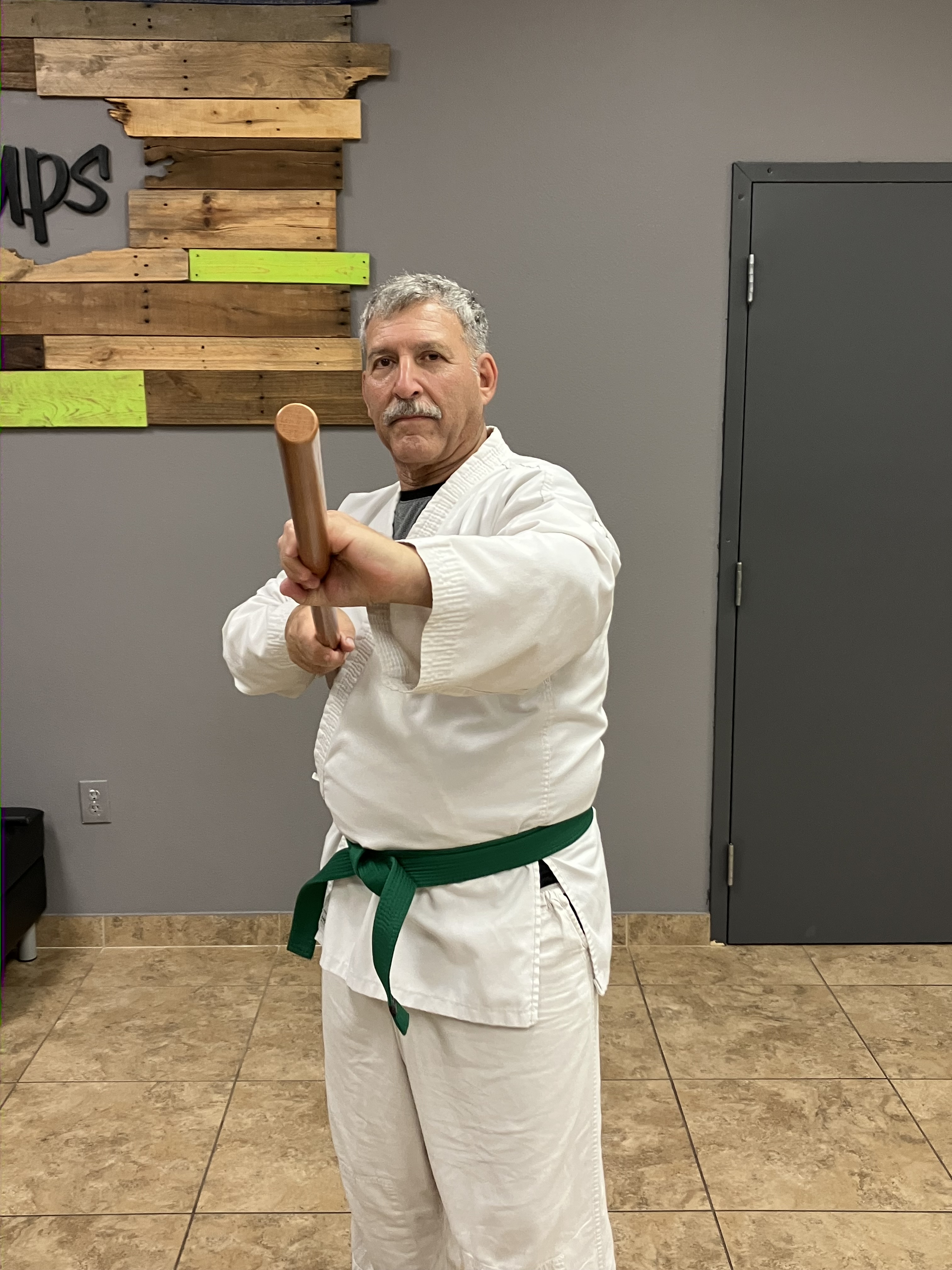
The Jo is usually built from hardwoods (e.g. Taiwanese pine, bamboo, red oak, white Japanese oak,) because of its ability to withstand the powerful cutting blows from a sharp sword (Shinken). Repeated strikes by a Jo could also damage or even break a steel blade, making it a great weapon for defense against bladed weapons like the Katana.
The targets of Jojutsu include hands, arms, legs, head, face, throat, chest, etc. The Jo works beautifully for blocking, striking, thrusting, sweeping, trapping, and throwing. I highly recommend learning the Jo after learning the Hanbo and before moving to the Bo.
[My thanks to Aikido Black Belt and Yon Ch’uan Green Belt 1 Stripe Joe Sciortino for demonstrating the Jo. Mr. Sciortino assists teaching at our Grace Martial Arts program in Lutz, Florida. He also has training in Shorin-Ryu Karate.]
Here is a ten-minute workout that will help you develop strength and technique is using the Jo for self defense. Notice the importance of practicing from both sides of the body.
I made a series of short videos more than 20 years ago for the purpose of demonstrating how to use various weapons for building flexibility. Here’s the video I made for the Jo. Keep in mind that I’m demonstrating exercises for flexibility rather than specifically using the short staff for self defense. However, the video will give you an idea of how to physically move the weapon.
Next Time
I’ll will look at another traditional Weapon you can study when our special series continues.
[Sensei McGee is a 9th Degree Black Belt in Yon Ch’uan Martial Arts, a Master Instructor in Hwa Yu T’ai Chi Ch’uan, a 7th Degree Black Sash in Shaolin Kung Fu, and a 3rd Degree Black Belt in Matsumura Seito Shorin Ryu Karate. Sensei McGee also has Black Belts in Tang Soo Do, Taekwondo, and Kempo.]
[Join our Grace Martial Arts Facebook Community!]
Grace Martial Arts © 1990 – 2026


