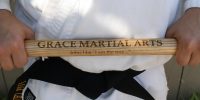

I’d like to continue a series about martial arts weapons that I started eight years ago. Not as an excuse (though it sounds like one), but other writing projects on this and other blogs took over my time. Sorry about that. I thought the idea of explaining the variety of martial arts weapons in a way that you could guide your child (or yourself) might be helpful.
I began martial arts training at the age of twelve. The first weapon I learned was the Yawara stick, also known as a “palm” stick because it fits neatly in the palm of your hand. It’s very easy to learn and use, plus it’s not an expensive weapon to buy or make.
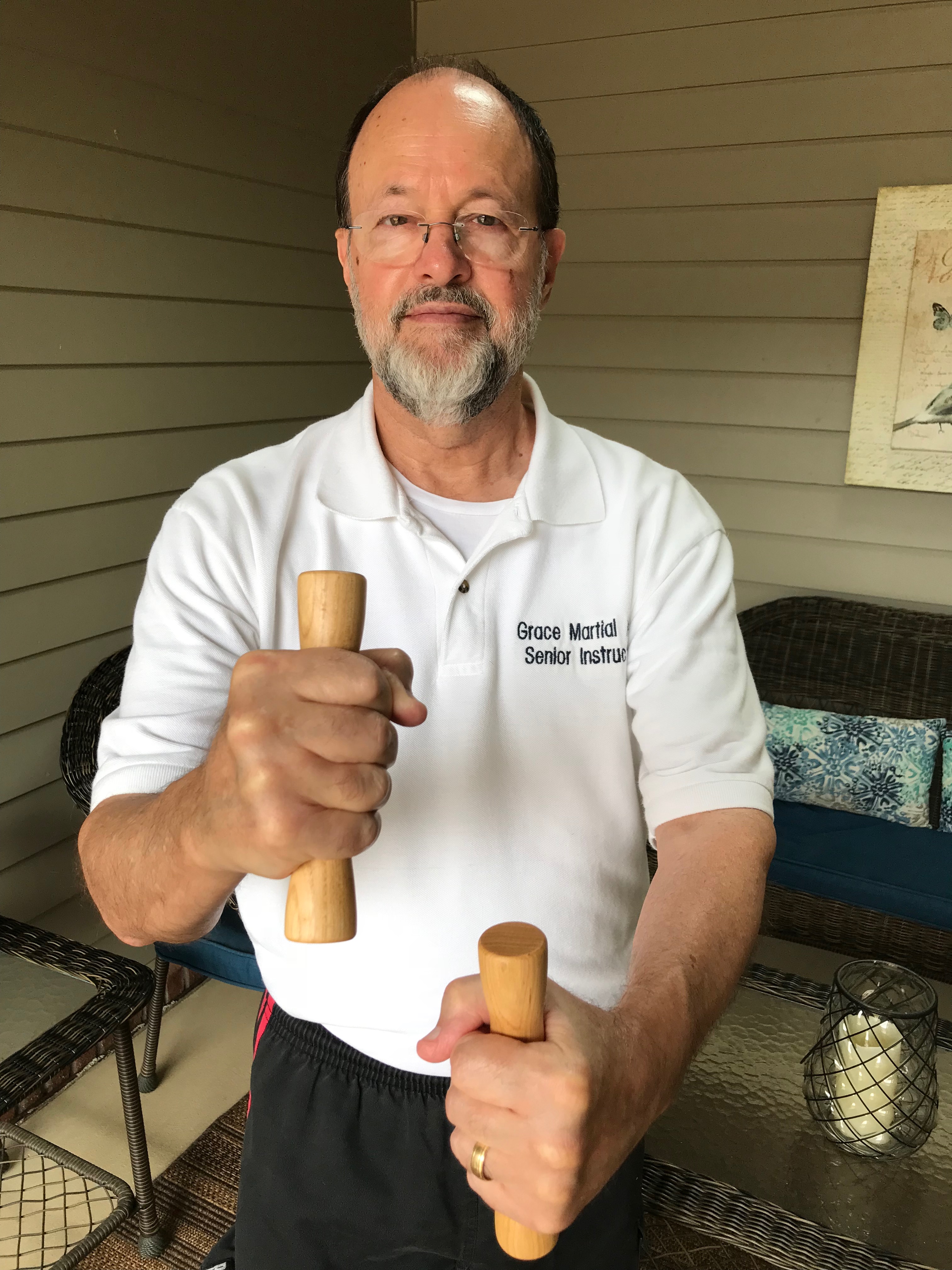
Let’s continue to the next wooden weapon I learned as a teenager. I believe it is one of the best for practical self defense because of how similar it is to things you and your child can find in your natural ‘environment.’
Escrima Sticks

One of the weapon arts we learn in Yon Ch’uan Martial Arts is Escrima. We begin training with a stick that’s about 24-28 inches in length. Sticks are made from many materials including:
- Rattan
- Hardwoods (e.g. oak, ash, waxwood, cocobolo)
- Bamboo
- Aluminum
- Steel
- Polypropylene
- Thermoplastics
- Fiberglass
- Foam-padded
I recommend ‘foam-padded’ sticks for children and any student who is new to using martial arts weapons. We always emphasize safety, but if a student is struck with a foam-padded stick they won’t be seriously injured. If the student is an older teenager or adult who has had adequate training with foam-padded sticks, I recommend using hardwood, rattan, or bamboo sticks. Training with those sticks will be more like sticks they find in their environment to defend themselves.
Higher black belt students may also want to learn how to use metal (e.g. aluminum, steel) and synthetic materials (e.g. thermoplastics, polypropylene, fiberglass) just so they understand how to wield a heavier weapon if it becomes necessary in a real self-defense situation. That type of training should be overseen by a senior or master instructor to ensure the safe handling of weapons that can inflict serious injury during training. Many schools use special helmets with face protection, along with thick pads to protect hands, arms, and legs – even with wooden weapons.
The general rule is that the stick is about the length of the practitioner’s arm. Another way to measure the length is from your chest to the midpoint of your palm. A child will usually do well with a shorter stick about 24-inches long. Teenagers and adults will do well with sticks that are 26-28 inches in length.
How to Defend with Sticks
Escrima is one of three primary Filipino Martial Arts (FMA) that include sticks, knives, and other bladed weapons. The other two arts are Kali and Arnis. These sticks can be used for blocking, striking, jabbing, trapping and throwing. The arts are named differently because of the Filipino regions where they dominate. I’ve studied all three and found some small differences in hand and footwork, but the similarities outweighed the differences – in my opinion. Here’s a short video that will help explain that:
Training in Escrima, Kali, or Arnis prepares you to grab almost any nearby object that is about the same length as the stick weapons to use for real self defense. Training in all three FMA includes learning how to disarm an opponent wielding another weapon and then using their weapon against them.
I highly recommend learning basic stick defense even if you aren’t yet learning a particular martial art. People of almost any age can grab a stick-like object and use it to defend themselves effectively with training from a qualified instructor.
Excercise Video
I made a series of videos about 20 years ago for students who were interested in how to use weapons to improve their cardio and flexibility. Here’s the video I made for Escrima sticks. Enjoy!
Next Time
We will look at a third martial arts Weapon in the next part of this series.
[Sensei McGee is a 9th Degree Black Belt in Yon Ch’uan Martial Arts, a Master Instructor in Hwa Yu T’ai Chi Ch’uan, a 7th Degree Black Sash in Shaolin Kung Fu, and a 3rd Degree Black Belt in Matsumura Seito Shorin Ryu Karate. Sensei McGee also has Black Belts in several other styles of martial arts.]
[Join our Grace Martial Arts Facebook Community!]
Grace Martial Arts © 1990 – 2026


3 Comments