
I’d like to continue a series about martial arts weapons. My purpose is to help you choose for yourself or your child one or more traditional martial arts weapons that will assist in developing an understanding of this ancient system of self defense.
If you are currently studying with a martial arts instructor, he or she will guide you to the weapon(s) that are best for your style. If you are not currently studying with an instructor, I hope this series will help you in your selection.
My first recommendation is the Yawara stick, also known as a “palm” stick because it fits neatly in the palm of your hand. Other recommendations include short and medium-length sticks, Nunchaku, and Tonfa. My next recommendations are longer wooden weapons: the Hanbo, Jo, and Bo. We’ll begin with the Hanbo.
Hanbo
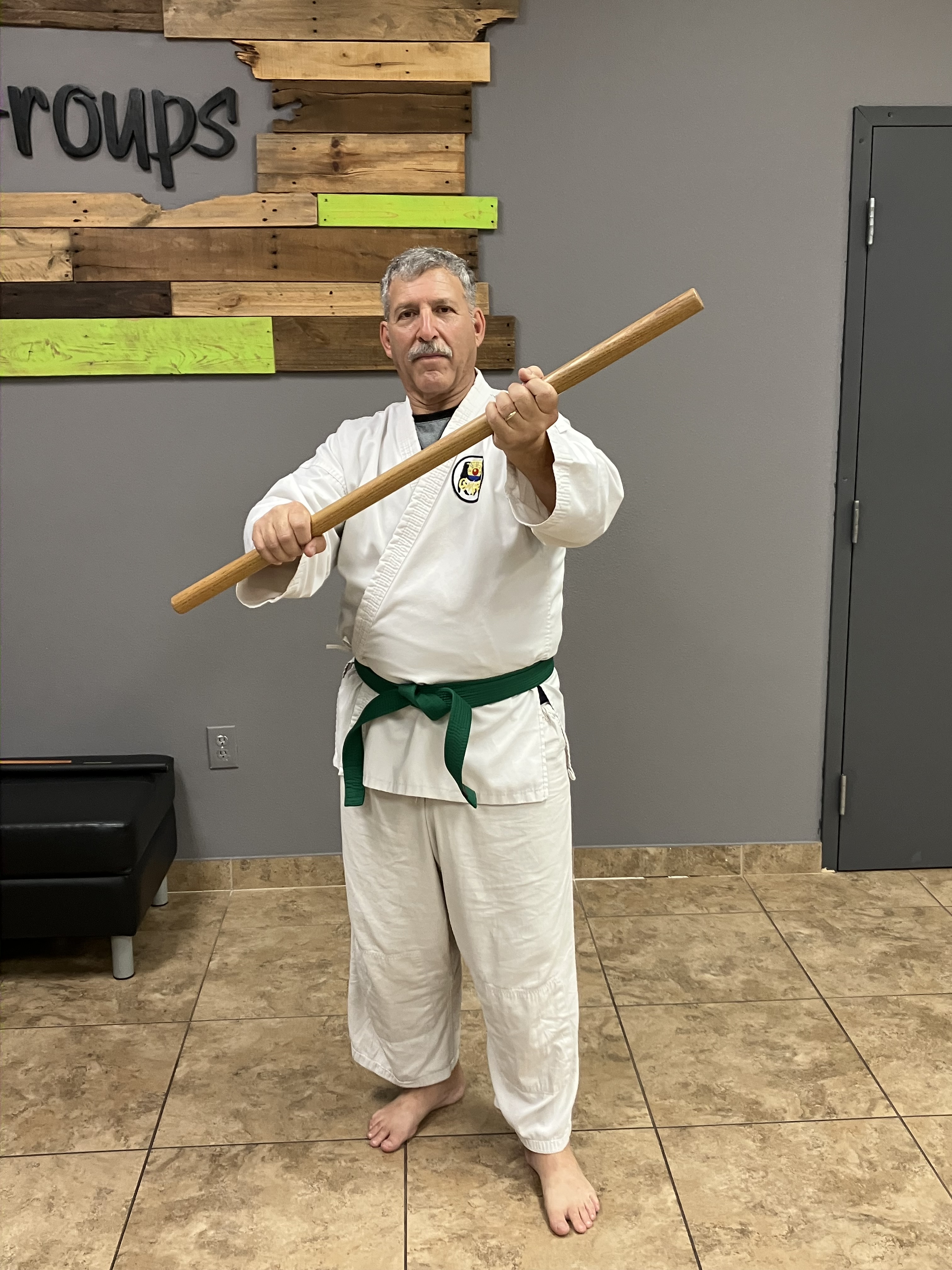
The word ‘Hanbo’ means ‘half bo’ or ‘half staff.’ The Hanbo is about three-feet long, though it can vary between 32 to 40 inches in length. Martial artists train to use the Hanbo for blocking, parrying, thrusting, striking, trapping, and throwing. We can use it to get close to an opponent or to keep an opponent at a distance. Hanbo training also includes defending against other weapons – wooden and metal. The Japanese martial art is known as Hanbōjutsu.
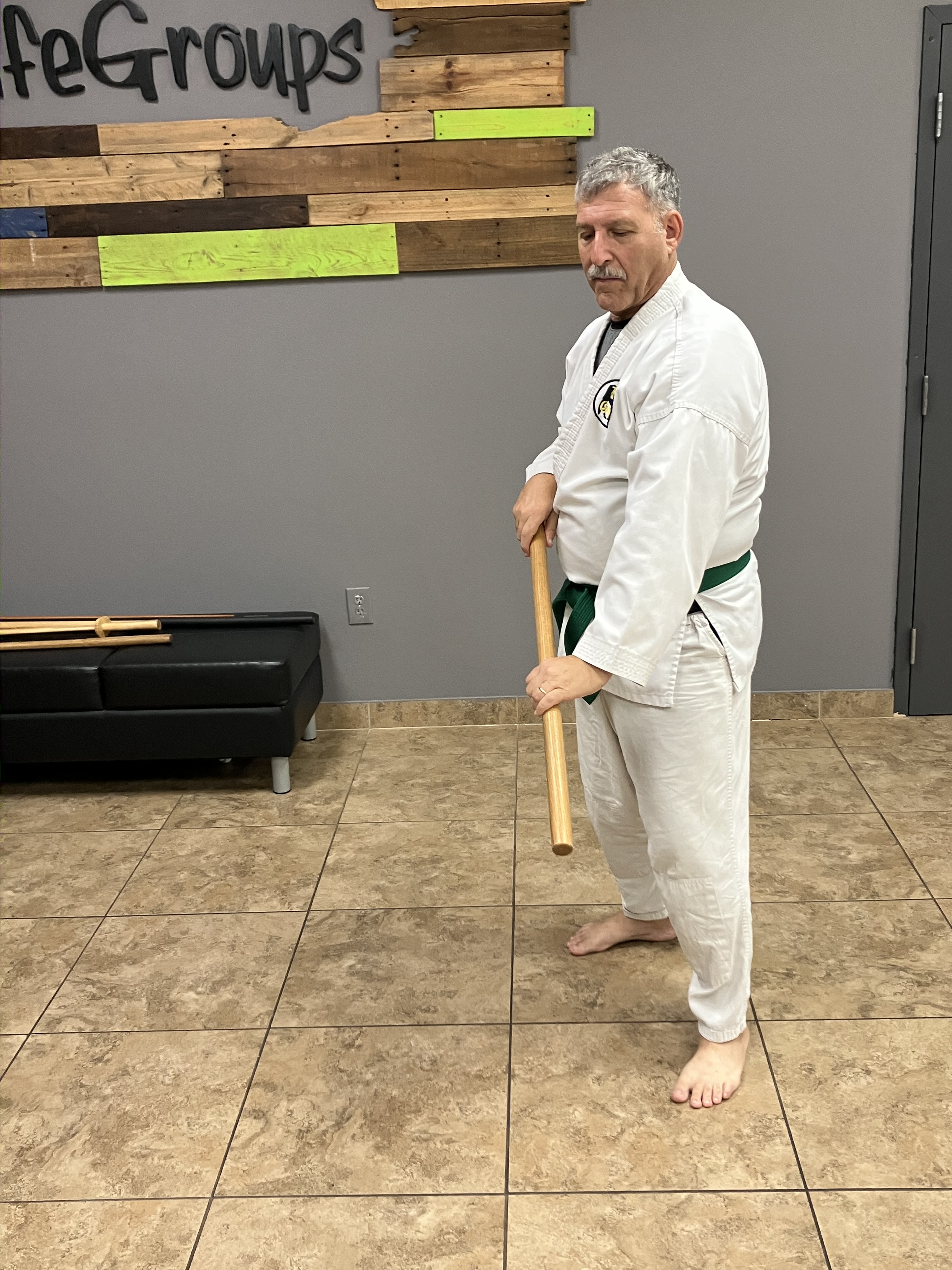
The ‘Hanbo’ is half the length of a standard ‘Rokushakubō,’ which is a six-foot staff. It’s about the same height as a walking cane, which means it’s easy to conceal and use quickly. Some of the training I do for Hanbōjutsu is similar to Sutekki Jutsu (e.g. defending with a cane, walking stick, etc.) because of the length of the weapon. One primary difference is that some canes have a hook at the top for holding the stick for walking. Other canes can have sharp or hard metal tops. Some even have knives or swords hidden inside the canes. Hanbos do not usually have anything hidden inside it, but the way you hold and use it is similar to using a cane. The Hanbo can also be held like you would hold a cane, which allows you to conceal how you might use it. That’s similar to how you can keep from telegraphing potential usage of a cane in self defense.
This is an excellent traditional weapon to learn in martial arts. Once you understand how to use the Hanbo, you will find it easy and natural to grab a piece of wood of similar length (e.g. broom handle, ax handle, small tree branch from the ground, etc.) to defend yourself if attacked. You can also use metal pipes for similar defensive purposes based on your training in Hanbōjutsu.
Because of the shorter length of the Hanbo compared to the Jo or Bo, the Hanbo works better at closer ranges. Training includes learning how to use stepping and swinging or thrusting the weapon to close the gap with an attacker. There are eight basic techniques for unarmed attackers known as Kihon Happo. Higher-level training progresses to techniques against short and long swords, thrusts, striking, joint locks, sweeping, and scissoring.
[My thanks to Aikido Black Belt and Yon Ch’uan Green Belt 1 Stripe Joe Sciortino for demonstrating the Hanbo. Mr. Sciortino assists teaching at our Grace Martial Arts program in Lutz, Florida. He also has training in Shorin-Ryu Karate.]
I believe strongly in the importance of drilling the basics (Kihon) of any weapon. Here’s a short video that demonstrates some basic drills for the Hanbo.
I made a series of short videos about ten years ago after moving from Florida to Alabama. My purpose was to continue teaching some basic weapons for my students living in Florida, Alabama, Georgia and elsewhere. The videos are unlisted on YouTube, so you will need to click Watch on YouTube to see them.
The first video is the first Hanbo Kata I teach. It’s very simple, but demonstrates some basics of stepping and striking with the weapon. The second video is based on using the Hanbo with the Tiger Form from 15 Animal Kung Fu.
Next Time
I’ll will look at another traditional Weapon you can study when our special series continues.
[Sensei McGee is a 9th Degree Black Belt in Yon Ch’uan Martial Arts, a Master Instructor in Hwa Yu T’ai Chi Ch’uan, a 7th Degree Black Sash in Shaolin Kung Fu, and a 3rd Degree Black Belt in Matsumura Seito Shorin Ryu Karate. Sensei McGee also has Black Belts in Tang Soo Do, Taekwondo, and Kempo.]
[Join our Grace Martial Arts Facebook Community!]
Grace Martial Arts © 1990 – 2026


